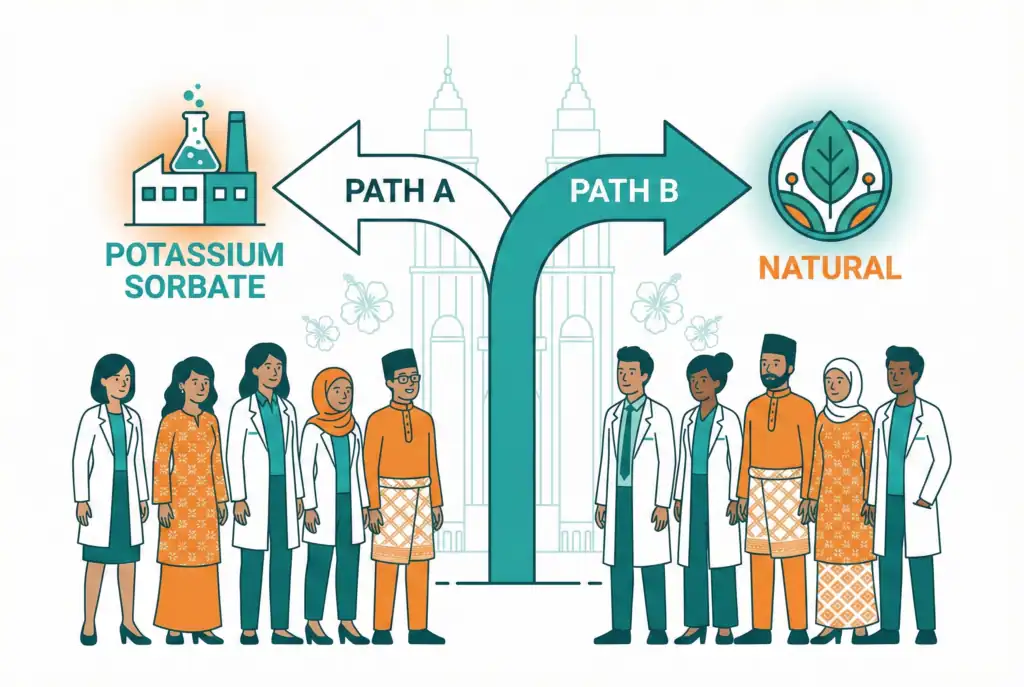
As a food producer in Malaysia’s competitive market, ensuring your product’s shelf life is non-negotiable. For decades, chemical preservatives like Potassium Sorbate have been the industry’s go-to solution. They are effective, affordable, and widely understood. But in today’s market, a significant shift is happening. Are you prepared for it?
The modern consumer is more educated and health-conscious than ever before. They are actively reading labels, questioning unfamiliar chemical names, and showing a strong preference for “clean-label” and “all-natural” products. This shift presents both a challenge and a massive opportunity for Malaysian producers aiming for both domestic and international success.
This guide will provide a clear, honest comparison between the traditional choice, Potassium Sorbate, and the future of food safety: natural preservatives.
Understanding Potassium Sorbate
Potassium Sorbate is a chemical salt of sorbic acid, widely used as a preservative to inhibit the growth of mold, yeast, and fungi in foods like cheese, wine, baked goods, and dried meats.
The Pros:
- High Efficacy: It is very effective at preventing spoilage from common yeasts and molds.
- Cost-Effective: As a mass-produced chemical, it is generally an inexpensive option.
- Tasteless in Low Concentrations: When used correctly, it typically doesn’t impact the flavour profile of the food.
The Cons (and Your Business Risks):
- “Chemical” on Your Label: This is the biggest drawback. The name “Potassium Sorbate” or its E-number (E202) on an ingredient list can be a major deterrent for health-conscious consumers, instantly damaging your brand’s “natural” image.
- Limited Antibacterial Action: It is primarily effective against fungi and yeast, but less so against bacteria.
- Potential Health Concerns: While generally recognized as safe, some studies have linked it to mild allergic reactions. The perception of it being a “chemical” is often enough to turn consumers away.
- Regulatory Hurdles: Stricter international markets often have tight regulations on the concentration and use of synthetic preservatives, creating a barrier for export.
The Rise of Natural Preservatives: A Smarter Choice
Natural preservatives are substances derived from natural sources—like plants, fruits, or fermentation—that prevent spoilage. They are the key to unlocking the “clean-label” market.
The Pros (and Your Business Opportunities):
- Meets Consumer Demand: An “all-natural” label is a powerful marketing tool. It builds trust, justifies a premium price, and attracts a loyal customer base.
- Clean & Simple Ingredient List: Ingredients like “Grapefruit Seed Extract” are easily understood and accepted by consumers, enhancing your brand’s transparency and appeal.
- Broad-Spectrum Protection: Many advanced natural preservatives, like our DF-100, offer dual-action benefits, providing both anti-microbial (against bacteria, mold, and yeast) and anti-oxidant protection in one ingredient.
- Enhanced Export Potential: Products with truly natural ingredient lists face fewer barriers in stringent international markets like Singapore, Europe, and the US.
The Cons:
- Perceived Higher Cost: While some natural solutions can have a higher initial cost, this is often offset by reduced product waste, longer shelf life, and the ability to command a higher retail price.
- Variable Efficacy: Not all natural preservatives are created equal. It’s crucial to choose a scientifically proven, high-potency solution from a trusted supplier.
The Solution: Nutritech DF-100
Making the switch from Potassium Sorbate doesn’t mean compromising on performance. In fact, it’s an upgrade.
Nutritech DF-100, a powerful preservative derived from grapefruit seed extract, was engineered to outperform traditional chemicals while meeting the highest clean-label standards.
- Powerful & Broad-Spectrum: It effectively inhibits a wide range of molds, yeasts, AND bacteria.
- Dual-Action: It also acts as an anti-oxidant, preventing rancidity and preserving the fresh colour and taste of your products.
- Certified & Trusted: It is fully KKM Approved and INFANCA Halal Certified, making it the perfect choice for the Malaysian market.
- Clean Label Guaranteed: On your ingredient list, it’s simply “Grapefruit Seed Extract”—a name your customers will trust.
Conclusion
While Potassium Sorbate has served the industry well, the market has evolved. Sticking with it means risking being left behind. Embracing a proven natural preservative like DF-100 is not just a technical upgrade; it’s a strategic business decision that protects your brand, attracts modern consumers, and unlocks your full growth potential.
Ready to make the switch? Contact us today to request a free sample of DF-100 and see the natural difference for yourself.
Hi, this is a comment.
To get started with moderating, editing, and deleting comments, please visit the Comments screen in the dashboard.
Commenter avatars come from Gravatar.